'Stealthing' Research: Non-Consensual Condom Removal is Sexual Assault and Affects All Genders
Current System Obstacles Block Help-seeking;
ACSVAW Urges Medico-Legal Reform to Expand Support
The Association Concerning Sexual Violence Against Women (the Association, or ACSVAW) has published Hong Kong's first study focusing on victimisation experiences related to "Non-Consensual Condom Removal" (NCCR), commonly known as 'stealthing'. The research reveals that the responding public broadly considers NCCR a violation of informed consent. It also found that victims come from diverse sexual and gender backgrounds. However, both current community and institutional systems fail to adequately acknowledge victims' experiences, creating significant hurdles when seeking help. The Association urges the authorities to expedite the reform of sexual offence laws to explicitly strengthen protections without gender distinction, and to urgently improve the responsiveness of emergency medical support services for victim-survivors.
The Stealthing as Sexual Assault: A Study on Non-Consensual Condom Removal and Related Sexual Violence Experiences (偷偷除套等於性侵—「未經同意下移除安全套」及相關性暴⼒經驗調查) comprises a questionnaire and an interview component. The questionnaire, conducted between October 2024 and February 2025, sought to understand public awareness of this form of sexual violence. Of the 277 valid responses received, 95.3% of respondents identified 'stealthing' as violating the principle of informed sexual consent (agreeing to sex with a condom is not the same as agreeing to sex without one), and 74.4% considered the act a form of sexual assault. Given that sexual violence is generally defined as any sexual act without the person's consent, this disparity suggests that some public understanding of sexual violence still needs clarification.
Regarding victimisation prevalence, 57 respondents reported experiencing NCCR, accounting for 20.6% of the total, which demonstrates that this is not an uncommon issue in Hong Kong society. For post-incident follow-up, the most sought-after services were STI testing (47.4%) and emergency contraception (40.4%). Worryingly, 21.1% of victims reported taking no follow-up action. Furthermore, only 2 victims (3.5%) reported the incident to the police, reflecting that the vast majority choose not to pursue the criminal justice system.
The interview component offered in-depth, face-to-face interviews with 10 victim-survivors of NCCR and related sexual violence to explore their personal experiences. Participants consistently defined NCCR as a violation of sexual consent. Firstly, sex with a condom and sex without one are fundamentally different acts: the former signifies a different level of intimacy and carries significantly different sexual health risks, with unprotected sex posing a much greater risk than protected sex.
Lily (a pseudonym), a survivor who experienced NCCR, stated:
"Why is a condom so important? Besides preventing STIs and pregnancy, for me, a condom is also a requirement for my intimate boundary. I feel that sex without a condom, or even internal ejaculation, should only happen with an intimate partner I approve of. But if it is a stranger or another sexual partner, I require them to wear a condom, because sex without a condom is an act of extreme intimacy for me."
Secondly, the act involves the perpetrator engaging in sex without a condom without the victim's consent or permission. This includes secretly removing the condom mid-intercourse, removing it despite the victim's explicit refusal, or faking the act of putting a condom on. These actions involve disregard, deceit, and a breach of the victim's decision to engage in protected, safer sex.
Aqua (a pseudonym), a survivor that participated in the interview, shared:
"At the time, I had heard of RainLily [sexual violence crisis centre], but I felt that RainLily was for people who had been raped. I didn't feel like I was one of them. I thought maybe only very serious cases with major trauma would seek help. So, at that time, I felt my incident was minor, purely my own bad luck, and I didn't think of any support channels." Aqua also mentioned the difficulty of discussing her experience with family and friends who hold more conservative views on sexual issues: "I already anticipated it; I didn't think my family would support me 100%. They might immediately think, 'Wow, you're so cheap.'"
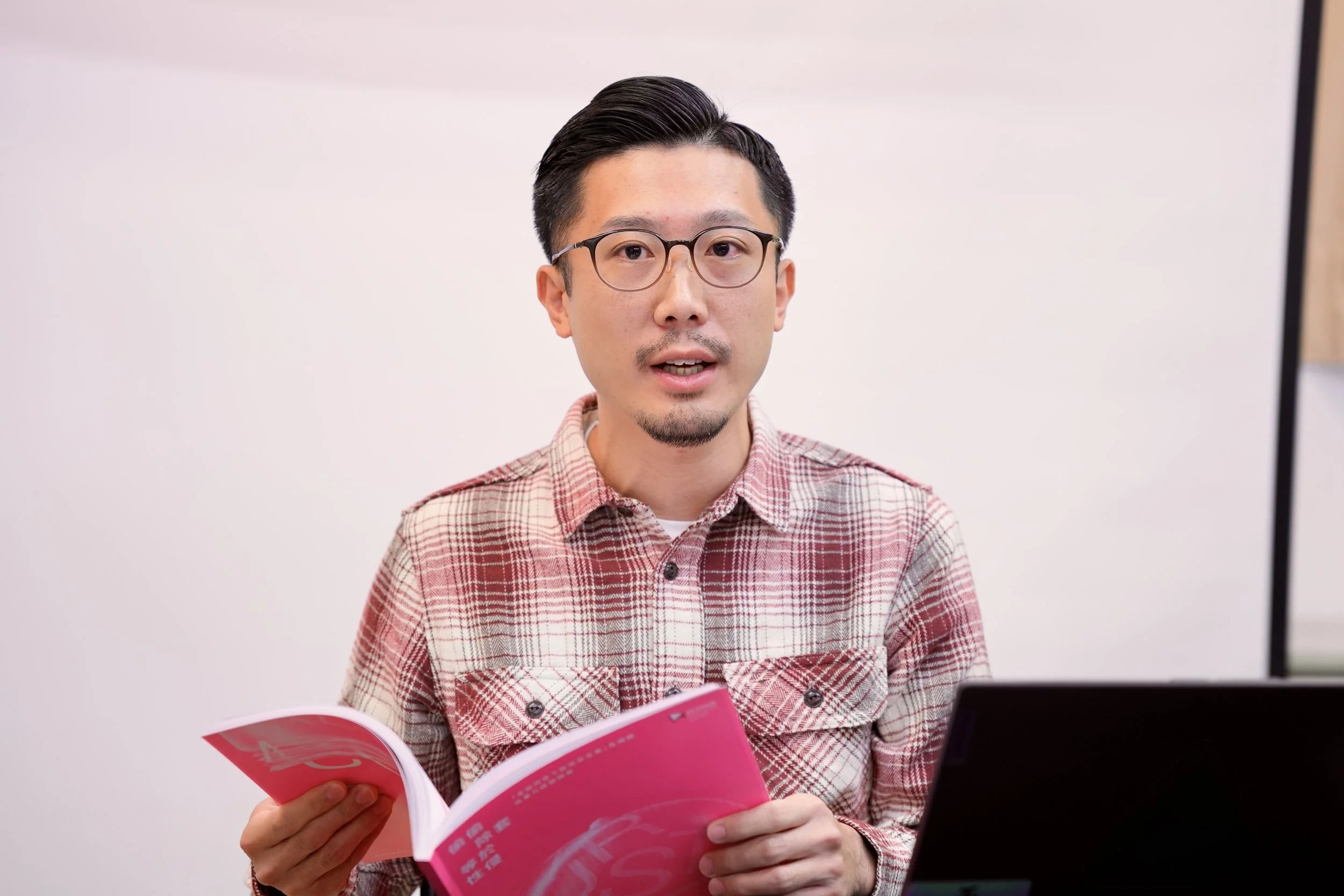
Dr. Albert Chi-hang YAU, Senior Research Officer of the Association Concerning Sexual Violence Against Women, stated:
"The Study found that victim-survivors face serious obstacles in seeking help, especially because terminology like 'Non-Consensual Condom Removal' remains unfamiliar in the Hong Kong context. Furthermore, the lack of discussion of this behaviour in the wider discourse on sexual violence means victim-survivors struggle to effectively describe their experience of abuse. Societal conservatism on sexual issues, combined with the victim's gender and sexual history, makes them even more fearful that their experience will be doubted or dismissed. Crucially, the current legal framework in Hong Kong lacks specific laws to clearly address this type of sexual assault and a complete, explicit legal definition of sexual consent. These systemic deficiencies make it difficult for victim-survivors to seek judicial justice."
Doris Tsz-wai CHONG, Executive Director of the Association Concerning Sexual Violence Against Women, commented:
"The absence of appropriate terminology leaves individuals uncertain if their experience qualifies as sexual assault, thus greatly complicating the process of seeking help. This underscores the importance of education, particularly training for relevant professionals such as healthcare and law enforcement officers. Considering the need for emergency medical support, the Association believes that related medical information should be more transparent and easily accessible, specifically including emergency contraception and HIV Post-Exposure Prophylaxis (PEP)."
The Association urges the authorities to expedite the reform of sexual offence legislation to strengthen and broaden legal protections for sexual violence victims without gender distinction. CHONG also suggested:
"Drawing on reform directions in multiple jurisdictions, the Association recommends that the government establish a clear and explicit legal definition of 'consent' within the sexual offences reform ordinance and introduce a 'list of circumstances where consent is vitiated' to explicitly include sexual assault acts that violate safer sex consensus, such as 'stealthing.' This would clearly criminalise such sexual assault behaviours, help the public recognise the seriousness of the issue, and, most importantly, allow victim-survivors to affirm that their experiences are protected by sexual offence law."