
SCMP|Call to close loopholes in Hong Kong’s child sexual offence bill
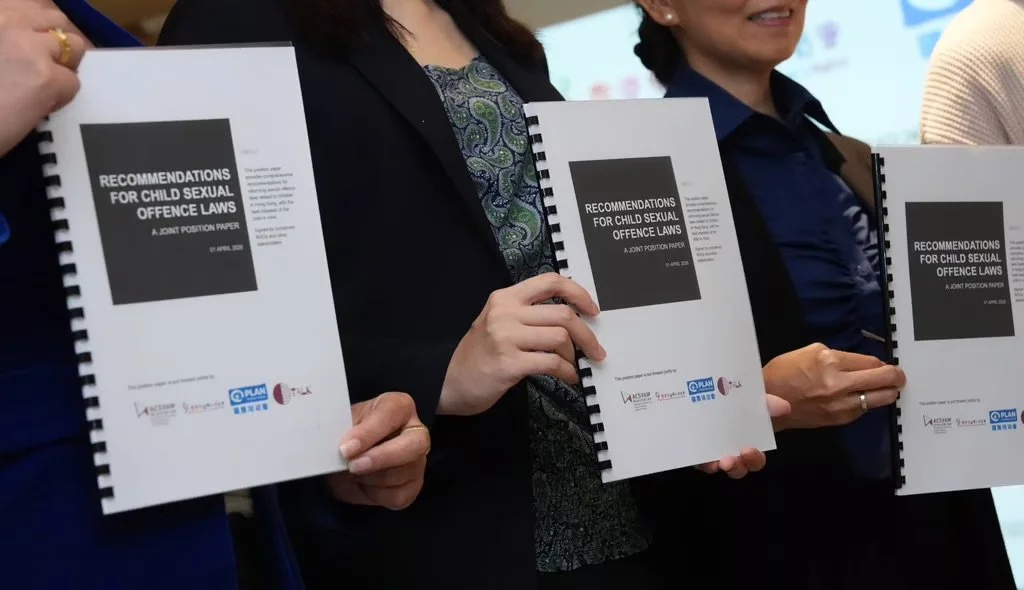
More than 30 groups and individuals have collectively called on the government to close loopholes in Hong Kong’s child sexual offence bill and provide greater protection to survivors.
In a paper released on Thursday, the non-profit organisations and professionals also urged the judiciary to review its practice directions to safeguard child abuse victims who often suffered from intense cross-examination in court, which could lead to secondary harm.
They highlighted the urgent need to examine legal gaps in the bill as the government has pledged to introduce it before the Legislative Council’s current session ends.
“With 16 per cent of children suffering from child sexual abuse in Hong Kong, we must urgently address critical gaps in Hong Kong’s child sexual offence laws to enhance protections for vulnerable children,” Taura Edgar, founder and chair of the board of Talk Hong Kong, said.
“These changes are essential to create a more effective legal framework that prioritises child safety.”
The bill will introduce changes to existing laws recommended by the Law Reform Commission following its reviews of sexual offences and sentences released in 2019 and 2022. It will establish new sexual offences involving children and people with mental impairments.
Doris Chong Tsz-wai, executive director of the Association Concerning Sexual Violence Against Women, said a new offence for persistent abuse was needed.
According to figures from RainLily, a sexual violence crisis support centre, 56 per cent of nearly 500 requests for help involving childhood sexual abuse between 2019 and 2023 involved repeated acts. It said 60 per cent of survivors only sought its help more than five years after the event.
But the current law required “very specific” details for evidence, such as the date, time and exact circumstances of the abuse, Chong noted.
For victims who had suffered persistent abuse, in some cases more than 100 times, recollecting so many details created “an impossible barrier to justice” and allowed perpetrators to evade conviction or be found guilty of a lesser offence, she said.
“[Prosecutors] asked whether it was the left or right hand that touched the body, what clothing was being worn … these are extremely difficult for the victims,” she said.
Creating an offence of persistent abuse would allow for prosecutions based on a demonstrated pattern of acts rather than survivors’ ability to distinguish one from another and the exact circumstances, Chong said.
A proportional penalty for persistent abuse should also be created, she said.
Kanie Siu Mei-kuen, chief executive officer of Plan International Hong Kong, called for the government to also introduce an offence for abuses of positions of trust to specifically protect children above the age of 16, as only sexual activity with minors younger than that was unlawful.
She argued that although children aged 16 and 17 had reached the legal age of consent, they remained vulnerable to grooming and exploitation by figures in positions of authority.
“When an adult is a teacher or coach in control of the student’s future and grades, under such a distorted power dynamic, is it genuine consent even if a young person said it is? No,” Siu said.
The government should refer to international practices and draft a list of professions that fell into that category, she said.
Billy Wong Wai-yuk, executive secretary of the Hong Kong Committee on Children’s Rights, said victims often suffered from excessively lengthy and intense cross-examinations in court that could lead to emotional distress and withdrawal.
She said the judiciary should revise its practice directions, including setting a time limit for cross-examinations, having the judge vet questions directed to the child witness ahead of time and requiring more cautious use of language. Accusing them outright of lying, for example, should not be allowed, Wong said.
“We want to find out the truth to what happened to these children,” she said.